The Science of Reaction Time: Why Milliseconds Matter
What really happens between seeing or hearing a signal and moving, why we react faster to sound than to light, how reaction time changes with age and sleep, and whether you can train it.
7 min read · Published September 17, 2026
At a glance
- Reaction time is the delay between a signal and your response. It adds together sensing the signal, deciding to act, and moving.
- Most people react to a sound tens of milliseconds faster than to a light, partly because the ear turns sound into nerve signals faster than the eye turns light into them.
- Simple reaction time stays fairly stable until about age 50, but losing sleep slows it down a lot, often without you noticing.
- Practice makes you faster at the task you practice. The biggest real-world gains come from good sleep and from training the specific skill you care about.
A ball flies toward your face, a car ahead brakes suddenly, a starting pistol fires. In each case there’s a short gap between the event and your response, usually a quarter of a second or less. That gap is your reaction time. It’s one of the oldest measurements in psychology, and it still tells scientists a lot about how the nervous system works, how it ages, and how tired it is.
What reaction time actually measures
Reaction time is the time from when a signal appears to when you start responding. Researchers separate a few kinds:
- Simple reaction time: one possible signal, one response. You wait for a light or a beep and press a button. The visual and audio reaction tests on this site measure this.
- Choice reaction time: several possible signals, each with its own response, like pressing left for red and right for blue.
- Go/no-go reaction time: respond to one signal but hold back for others. This adds the extra job of stopping yourself.
Whatever the type, every reaction goes through the same three broad stages. First comes perception: your eye or ear turns the signal into electrical nerve impulses and sends them to the brain. Next comes processing: the brain recognizes the signal and chooses a response. Last comes movement: a motor command travels down the spinal cord and nerves, and the muscles contract.
By recording the electrical activity of the muscles, researchers can split the total into “premotor time” (from the signal until the muscle first activates) and “motor time” (from muscle activation to the actual movement). The premotor part, most of which happens inside the brain, is usually the larger share. The wiring itself is fast. Nerve signals in large motor fibers travel tens of meters per second, so the trip from brain to fingertip takes only a small fraction of the total time.
Why sound beats light
If you try both reaction tests on this site, you’ll probably be a little faster with the beep than with the color change. That matches decades of lab results: in study after study, including a comparison of medical students’ reactions, auditory reaction times come out reliably shorter than visual ones[1].
Much of the difference starts in the sense organs. In the inner ear, sound vibrations mechanically pull open ion channels in the hair cells, which is an almost instantaneous process. In the retina, light has to set off a chain of chemical reactions inside photoreceptor cells before any nerve signal is produced, and that cascade takes tens of milliseconds. As a result, the auditory part of the brain starts responding to a sound noticeably sooner than the visual part responds to a flash.
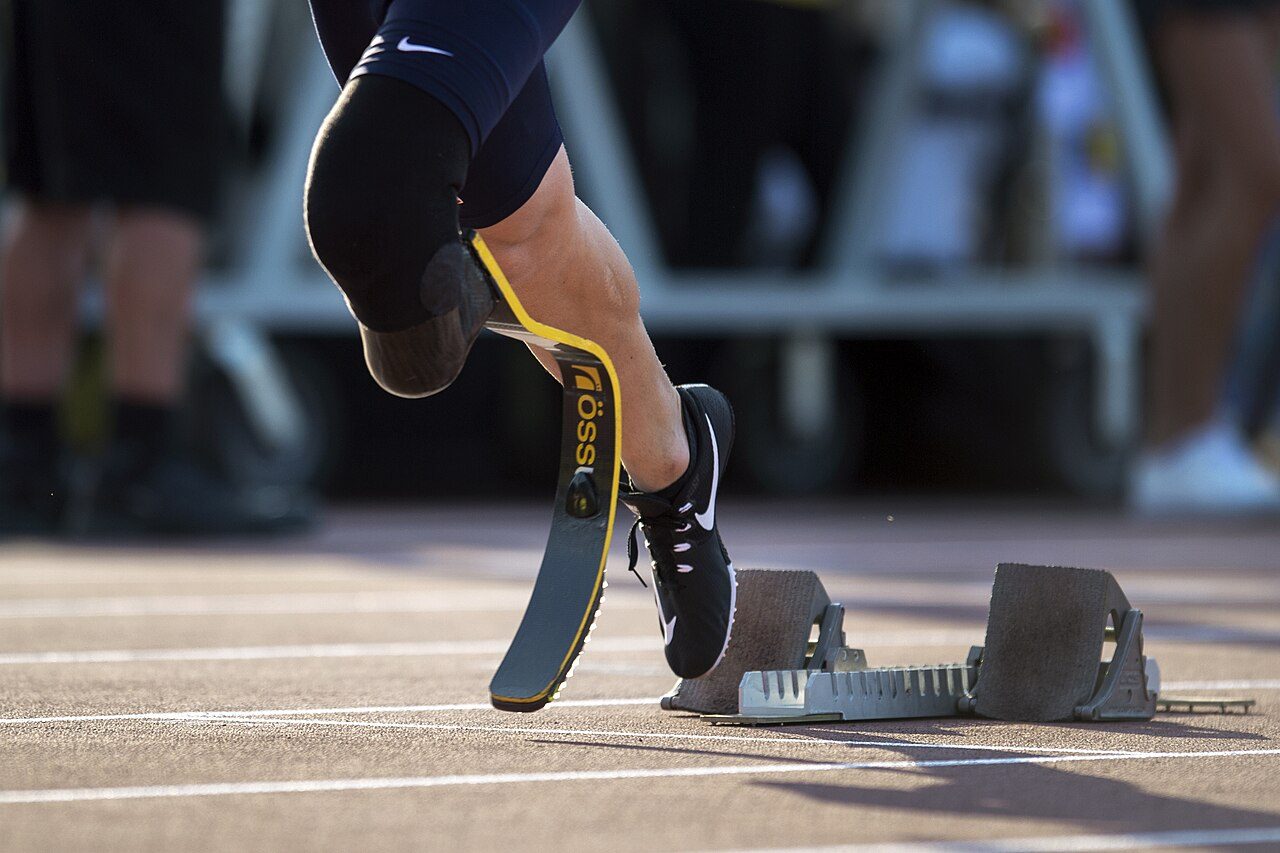
This is one reason sprint races start with a gun or beep instead of a light. It’s also why World Athletics treats any reaction faster than 0.1 seconds after the gun as a false start. At that speed, the runner is assumed to have guessed rather than reacted.
More choices, slower responses
Simple reactions are the fastest kind, because there’s nothing to decide. Add choices and reaction time goes up in a predictable way. In 1952 the British psychologist William Hick showed that choice reaction time increases with the logarithm of the number of options: every time the number of possible signals doubles, you add a roughly constant amount of time[2]. This rule, now known as Hick’s law, is still used in interface design and sports science. It helps explain why an unpredictable opponent is so hard to react to, and why experienced athletes rely so heavily on anticipation.
A brief history: from astronomy to the mind
The study of reaction time began with a firing. In 1796, the Astronomer Royal Nevil Maskelyne dismissed his assistant David Kinnebrook because Kinnebrook’s timings of stars crossing a telescope’s crosshair were consistently about 0.8 seconds later than his own. Decades later, the German astronomer Friedrich Bessel looked into such disagreements and found that every observer had a small, consistent personal delay. Astronomers called it the “personal equation” and began correcting for it. Without meaning to, they had discovered that perceiving and responding take time.
In 1850 Hermann von Helmholtz measured how fast signals travel along a frog’s nerve and found a speed of only a few tens of meters per second. Many scientists at the time believed nerve signals were effectively instantaneous and too fast to measure. If nerve signals take measurable time, then maybe thought does too.
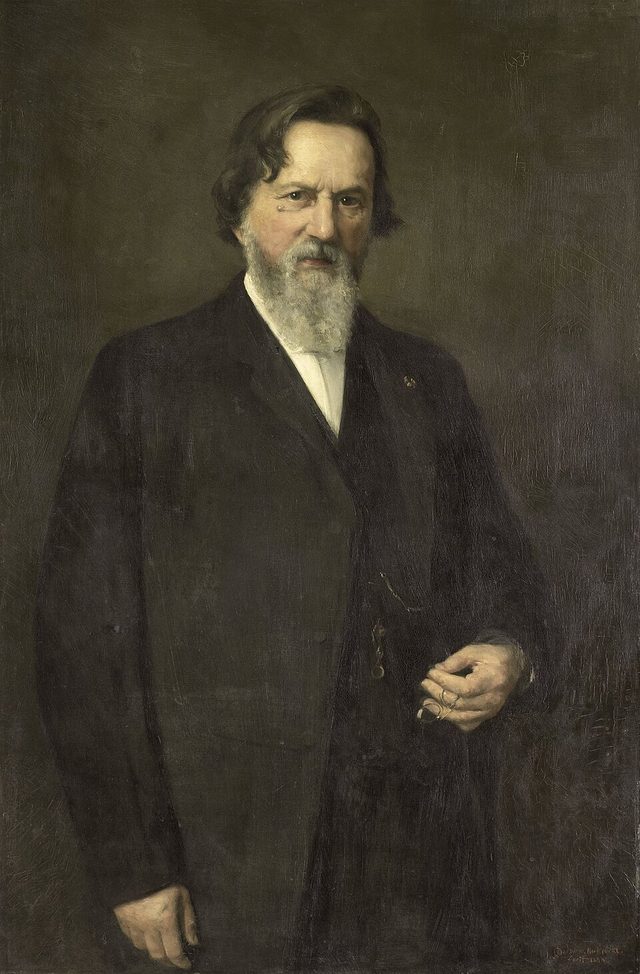
The Dutch physiologist Franciscus Donders put that idea to the test in 1868. He measured simple reactions, choice reactions, and go/no-go reactions, then subtracted one from another to estimate how long the mental steps of recognizing a stimulus and choosing a response take[3]. His “subtraction method” is often considered the start of mental chronometry, the use of response times to study the mind. In the 1880s Francis Galton set up a public laboratory in London, where he measured the reaction times of thousands of visitors, hoping it would reveal differences in mental ability. Today reaction time tasks are standard tools in sleep research, driving safety, aging studies, and neuropsychology.
What affects your reaction time
Age. In a UK survey of more than 7,000 adults, simple reaction time changed little until around age 50. Choice reaction time slowed steadily across the whole adult age range[4]. Reaction times also become more variable with age: the gap between a person’s fast and slow responses widens.
Sleep. This is one of the biggest influences. In a well-known lab study, people limited to six hours of sleep a night for two weeks built up deficits in attention and reaction time similar to those seen after one or two nights of no sleep at all. They rated themselves as only slightly sleepy[5]. In other words, tired people are slow and often don’t realize it.
Alertness and readiness. Time of day, caffeine, alcohol, illness, and distractions all shift reaction time. So does predictability. If a signal always comes after the same delay, people start anticipating it instead of reacting. That’s why the tests on this site use a random wait before each signal.
Overall brain health. Reaction time is a simple but sensitive measure of how efficiently the nervous system is working. In a Scottish study that followed middle-aged adults for 14 years, slower reaction times were associated with a higher risk of death during follow-up[6]. That doesn’t mean speeding up your clicks will make you live longer. It means reaction time reflects the general condition of the body and brain.
Can you train your reaction time?
Partly. Simple reaction time has a physiological floor that no amount of practice will push through. However, most people get noticeably faster over their first sessions with a new test as they learn to stay relaxed, keep their finger ready, and hold attention through the waiting period. After that, improvements get smaller.
What matters more in real life is what you’re reacting to. A large meta-analysis of expertise in sport found that skilled athletes do respond faster and more accurately than novices, but mainly because they’re better at picking up early cues and anticipating what will happen. Raw nerve speed isn’t the main difference[7]. A tennis player’s edge comes from reading the opponent’s body before the ball is struck.
Some broader training does seem to carry over. Research on fast-paced action video games found that players make quicker decisions on a range of lab tasks without becoming less accurate, and some training studies suggest the games themselves contribute to the effect[8]. The common theme is that training which demands fast, accurate responses to changing information tends to help most with tasks that make similar demands.
How practicing can benefit you
- A personal alertness check. Once you know your normal average, a much slower result is a useful signal that you’re tired or distracted. That’s worth knowing before you drive, study, or train.
- Practice staying ready. Waiting through an unpredictable delay without drifting off or jumping early exercises sustained attention and impulse control, the same “ready but not twitchy” state that matters in sports, gaming, and driving.
- A warm-up. A few rounds before a match or a gaming session is a quick way to get focused.
- Watching your trends. Tracking your average over weeks can show the effects of sleep, stress, caffeine, or exercise habits in a way you can actually see.
Getting reliable results
Screens, input devices, and browsers all add small delays of their own. A typical 60 Hz display only updates about every 17 milliseconds. So compare your results with your own past results, not with lab values or someone else’s phone. Use the same device and position each time, do a couple of warm-up rounds, and pay more attention to your average than to one lucky best time. If you want to compare senses, try the Visual Reaction Time Test and the Audio Reaction Time Test back to back.
Try it yourself
Put the science into practice with these free exercises — no sign-up, right in your browser.
References
- Jain, A., Bansal, R., Kumar, A., & Singh, K. D. (2015). A comparative study of visual and auditory reaction times on the basis of gender and physical activity levels of medical first year students. International Journal of Applied and Basic Medical Research, 5(2), 124–127. Link
- Hick, W. E. (1952). On the rate of gain of information. Quarterly Journal of Experimental Psychology, 4(1), 11–26. doi:10.1080/17470215208416600
- Donders, F. C. (1969). On the speed of mental processes (W. G. Koster, Trans.). Acta Psychologica, 30, 412–431. (Original work published 1868) doi:10.1016/0001-6918(69)90065-1
- Der, G., & Deary, I. J. (2006). Age and sex differences in reaction time in adulthood: Results from the United Kingdom Health and Lifestyle Survey. Psychology and Aging, 21(1), 62–73. doi:10.1037/0882-7974.21.1.62
- Van Dongen, H. P. A., Maislin, G., Mullington, J. M., & Dinges, D. F. (2003). The cumulative cost of additional wakefulness: Dose-response effects on neurobehavioral functions and sleep physiology from chronic sleep restriction and total sleep deprivation. Sleep, 26(2), 117–126. doi:10.1093/sleep/26.2.117
- Deary, I. J., & Der, G. (2005). Reaction time explains IQ’s association with death. Psychological Science, 16(1), 64–69. doi:10.1111/j.0956-7976.2005.00781.x
- Mann, D. T. Y., Williams, A. M., Ward, P., & Janelle, C. M. (2007). Perceptual-cognitive expertise in sport: A meta-analysis. Journal of Sport & Exercise Psychology, 29(4), 457–478. doi:10.1123/jsep.29.4.457
- Dye, M. W. G., Green, C. S., & Bavelier, D. (2009). Increasing speed of processing with action video games. Current Directions in Psychological Science, 18(6), 321–326. doi:10.1111/j.1467-8721.2009.01660.x
This article is for general education and isn’t medical advice. The exercises on this site are general wellness tools, not diagnostic tests or treatments — see the Disclaimer for details. Spotted an error or a newer study we should know about? Let us know.
More articles
- Eye training · 6 min readSmooth Pursuit: How Your Eyes Follow a Moving Target
- Eye training · 7 min readPeripheral Vision and Visual Attention: Seeing More Than You Look At
- Focus · 7 min readThe Schulte Table: The Science of Visual Search and Focus
- Memory · 6 min readWorking Memory: How Much Can Your Mind Hold at Once?
- Math · 6 min readMental Math: What Happens in Your Brain When You Calculate
- Breathing · 7 min readBox Breathing and 4-7-8 Breathing: The Science of Slow Breathing