Smooth Pursuit: How Your Eyes Follow a Moving Target
The science of smooth pursuit eye movements — the brain circuits behind them, a century of research from Raymond Dodge to modern sports vision, and what tracking practice can realistically do for you.
6 min read · Published September 17, 2026
At a glance
- Smooth pursuit is the eye movement that keeps a moving object in sharp focus by turning your eyes at the same speed the object moves.
- Almost nobody can make a smooth pursuit movement without something to follow. Your eyes need a moving target, which is why tracking drills give you one.
- Pursuit depends on a brain network that includes motion-sensing areas of the visual cortex, the frontal eye fields, and the cerebellum. It works best when motion is predictable.
- Tracking practice is a good focus drill and warm-up, but it won’t fix nearsightedness or other focusing problems. Diagnosed eye conditions need professional care.
Watch a bird cross the sky, read the side of a passing bus, or follow a tennis ball over the net, and your eyes do something quietly impressive: they lock onto the moving object and glide along with it. Scientists call this smooth pursuit. It feels effortless, but it takes a coordinated network of brain areas that sense motion, predict it, and adjust your eye muscles many times per second.
Why your eyes have to move at all
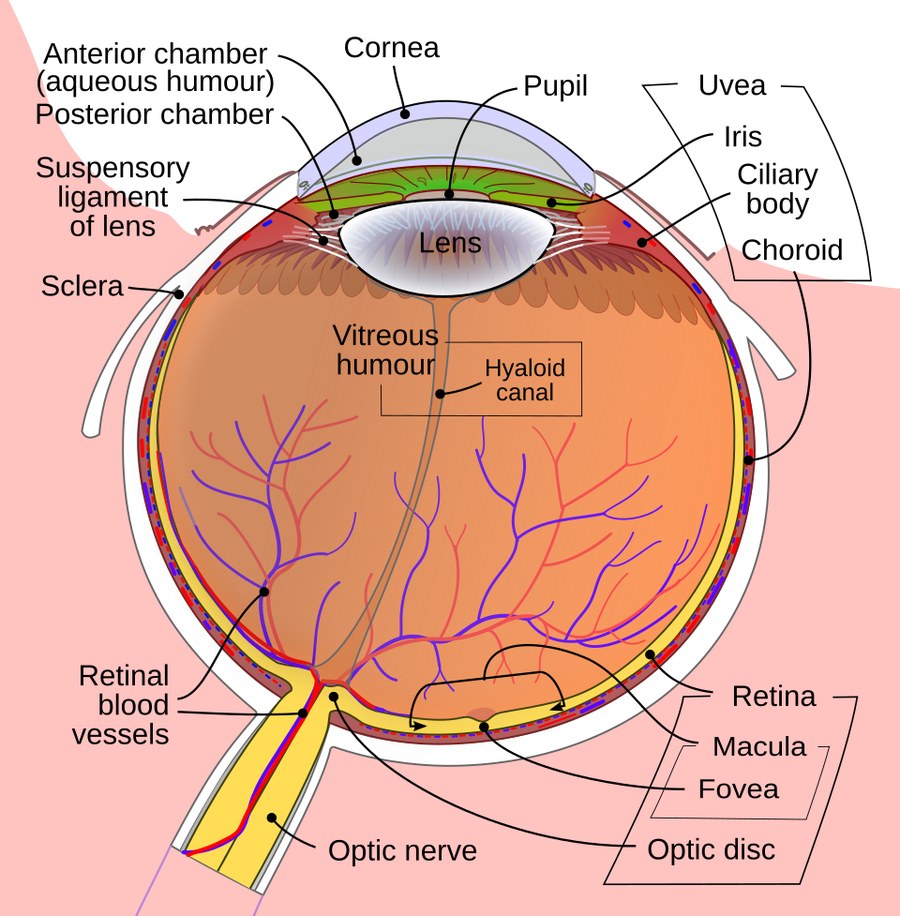
Only a tiny part of your vision is truly sharp. The fovea, a small pit at the center of the retina packed with cone cells, covers roughly the width of your thumbnail held at arm’s length. Everything outside it is blurrier. To see detail, your eyes have to keep the image of what you’re looking at on the fovea.
That’s easy when things stay still. When an object moves, its image slides across the retina, and even modest sliding smears the detail. Smooth pursuit solves this by rotating the eyes to match the target’s motion, so the image stays on the fovea and stays sharp.
One of several eye movement systems
In 1903 the American psychologist Raymond Dodge used photographic recordings to sort eye movements into distinct types[1]. His basic scheme still holds. Modern textbooks describe several systems, each with its own job:
- Saccades: fast jumps that move your gaze from one point to another, as your eyes do when reading.
- Smooth pursuit: continuous tracking of a small moving target.
- Vergence: turning the eyes inward or outward to look at things nearer or farther away.
- Vestibulo-ocular reflex: counter-rotating the eyes to keep your view steady when your head moves.
- Optokinetic response: following large moving scenes, like the view from a train window.
Here’s something you can check right now. Try to sweep your gaze slowly and smoothly across the room. You can’t. Your eyes move in a series of small jumps (saccades). Now hold up a finger, move it slowly, and follow it. The motion becomes smooth. With rare exceptions, pursuit needs a moving target. That’s why a tracking exercise gives your eyes something real to follow.
How smooth pursuit works in the brain
When a target starts to move, the eyes begin following it after roughly a tenth of a second. Visual motion signals are processed in specialized areas of the visual cortex, especially the middle temporal area (MT) and its neighbor MST, which encode the target’s direction and speed. The frontal eye fields help select the target and set how strongly to respond. Signals then pass through the brainstem to the cerebellum, which calibrates the movement and learns from errors, before reaching the nerves that control the six muscles around each eye[2].
Pursuit has limits. It’s most accurate for slow and moderate speeds, up to roughly 30 degrees of visual angle per second. As targets move faster, the eyes start to lag, and the brain adds small “catch-up saccades” to jump back onto the target. You can often see this when you try to follow something that whips past.
Pursuit also predicts. When motion is regular, like a pendulum or a ball bouncing off the same walls, the eyes learn the pattern and can anticipate turns, reducing their lag. Pursuit is also closely tied to attention: the object you pursue is the object you’re attending to[3]. That’s why the DVD Bounce exercise flashes numbers inside the ball. Reading them keeps your attention, and your eyes, locked on the target.
A brief history
Dodge didn’t stop at classifying eye movements. In 1908 he and the psychiatrist Allen Diefendorf recorded the eye movements of psychiatric patients and noticed that some patients’ pursuit was unusually irregular[4]. The finding was largely forgotten for decades, then revived in the 1970s. Irregular pursuit is now one of the most studied eye-movement markers in psychiatric research.
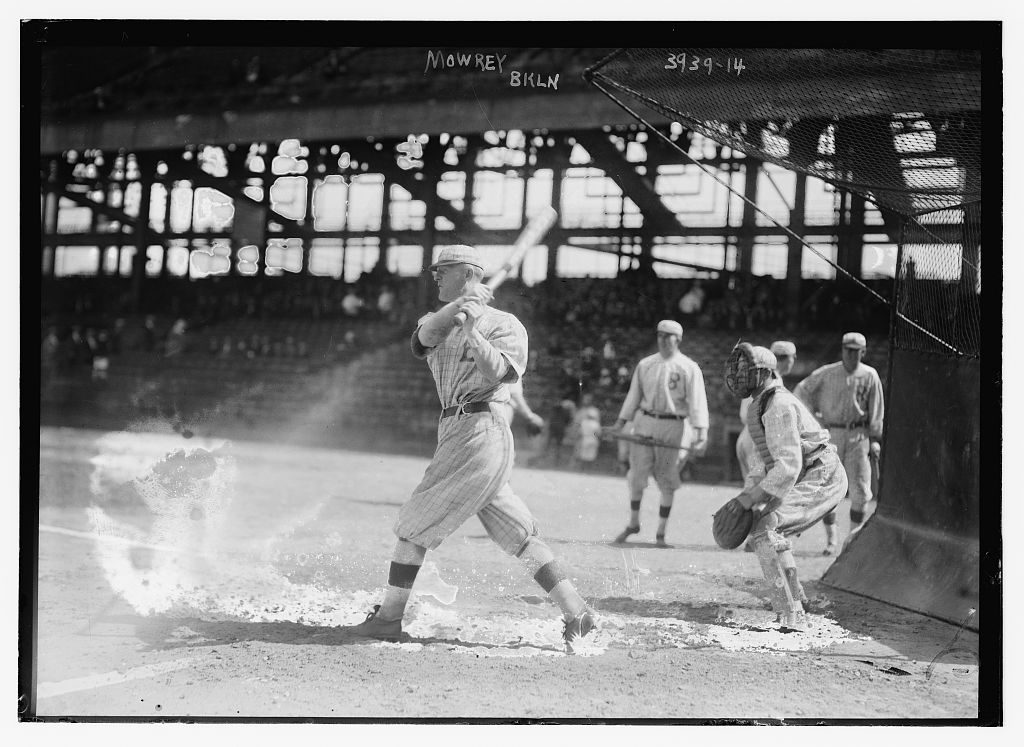
Pursuit also shows up in everyday settings. The police “horizontal gaze nystagmus” roadside test checks, among other things, whether a driver’s eyes can smoothly follow a moving pen, because alcohol makes pursuit jerky. Sports scientists got interested too. In a classic 1984 study, engineers Terry Bahill and Tom LaRitz asked why batters can’t “keep their eye on the ball.” They found that as a fast pitch nears the plate, its angular speed exceeds what pursuit can handle, so nobody can track it all the way. A professional player kept up for longer than the students did[5].
Modern eye trackers have made pursuit cheap to measure. Researchers now study it in relation to fatigue, concussion, aging, and athletic skill.
What the research says about training
Pursuit is adaptable. The cerebellum adjusts it with experience, and practice with a particular kind of motion improves prediction for that motion. The bigger question is whether tracking practice makes a difference outside the exercise.
In sport, the evidence is encouraging but still developing. When the University of Cincinnati baseball team added a vision-training program (including tracking, saccade, and near–far focusing drills), the team’s batting average rose from .251 to .285 the following season, a larger improvement than the rest of its conference[6]. That study wasn’t a randomized trial, so other factors may have contributed. A review of digital sports-vision training concluded that the approach is promising, while calling for more rigorous studies[7].
For eyesight itself, be skeptical of big claims. A systematic review of eye exercises found no clear scientific support for claims that they improve conditions such as nearsightedness or general visual acuity. The one exception with reasonable support was convergence insufficiency, a condition where the eyes struggle to turn inward for close work[8]. A later randomized trial in children with that condition found that office-based therapy supervised by a trained therapist, with home practice, worked better than home exercises alone[9]. In short, general tracking drills are training for attention and coordination. They aren’t a substitute for glasses, contact lenses, or an eye exam.
How tracking practice can benefit you
- Sustained visual attention. Staying locked on a single moving target for a few minutes, without drifting, is a concentrated focus exercise.
- A warm-up for fast-moving activities. Ball sports, racket sports, and action games all involve tracking. A short drill beforehand is a quick way to get your eyes and attention engaged.
- Reading while moving. Combining pursuit with reading the number trains you to pick out detail from a moving object, which is useful for reading signs or scoreboards on the move.
- Noticing your own state. Tracking feels noticeably harder when you’re tired. Paying attention to that is useful information in itself.
How to practice well
Keep your head still and let only your eyes move, so you’re using pursuit rather than head movements. Start at a speed where you can read nearly every number, and speed up only when that feels easy. At higher speeds you’ll feel more catch-up saccades, which is a sign you’ve reached the edge of your pursuit range. Short sessions of two to five minutes are plenty. Blink normally, and stop if you notice eye strain, headache, or dizziness. If you spend long hours on screens, regular breaks where you look into the distance matter more than any drill. When you’re ready, open DVD Bounce — Eye Training and give it a try.
Try it yourself
Put the science into practice with this free exercise — no sign-up, right in your browser.
References
- Dodge, R. (1903). Five types of eye movement in the horizontal meridian plane of the field of regard. American Journal of Physiology, 8(4), 307–329. doi:10.1152/ajplegacy.1903.8.4.307
- Lisberger, S. G. (2010). Visual guidance of smooth-pursuit eye movements: Sensation, action, and what happens in between. Neuron, 66(4), 477–491. doi:10.1016/j.neuron.2010.03.027
- Kowler, E. (2011). Eye movements: The past 25 years. Vision Research, 51(13), 1457–1483. doi:10.1016/j.visres.2010.12.014
- Diefendorf, A. R., & Dodge, R. (1908). An experimental study of the ocular reactions of the insane from photographic records. Brain, 31(3), 451–489. doi:10.1093/brain/31.3.451
- Bahill, A. T., & LaRitz, T. (1984). Why can’t batters keep their eyes on the ball? American Scientist, 72(3), 249–253.
- Clark, J. F., Ellis, J. K., Bench, J., Khoury, J., & Graman, P. (2012). High-performance vision training improves batting statistics for University of Cincinnati baseball players. PLoS ONE, 7(1), e29109. doi:10.1371/journal.pone.0029109
- Appelbaum, L. G., & Erickson, G. (2018). Sports vision training: A review of the state-of-the-art in digital training techniques. International Review of Sport and Exercise Psychology, 11(1), 160–189. doi:10.1080/1750984X.2016.1266376
- Rawstron, J. A., Burley, C. D., & Elder, M. J. (2005). A systematic review of the applicability and efficacy of eye exercises. Journal of Pediatric Ophthalmology & Strabismus, 42(2), 82–88. doi:10.3928/01913913-20050301-02
- Convergence Insufficiency Treatment Trial Study Group. (2008). Randomized clinical trial of treatments for symptomatic convergence insufficiency in children. Archives of Ophthalmology, 126(10), 1336–1349. doi:10.1001/archopht.126.10.1336
This article is for general education and isn’t medical advice. The exercises on this site are general wellness tools, not diagnostic tests or treatments — see the Disclaimer for details. Spotted an error or a newer study we should know about? Let us know.
More articles
- Reflexes · 7 min readThe Science of Reaction Time: Why Milliseconds Matter
- Eye training · 7 min readPeripheral Vision and Visual Attention: Seeing More Than You Look At
- Focus · 7 min readThe Schulte Table: The Science of Visual Search and Focus
- Memory · 6 min readWorking Memory: How Much Can Your Mind Hold at Once?
- Math · 6 min readMental Math: What Happens in Your Brain When You Calculate
- Breathing · 7 min readBox Breathing and 4-7-8 Breathing: The Science of Slow Breathing