Box Breathing and 4-7-8 Breathing: The Science of Slow Breathing
How slow, structured breathing affects your heart, nervous system, and mood — the physiology, the history from pranayama to military training, and what clinical studies actually show.
7 min read · Published September 17, 2026
At a glance
- Breathing runs automatically, but you can take conscious control of it at any moment. That makes it a direct way to influence your nervous system.
- Slow breathing strengthens the natural rhythm linking your breath and heartbeat, and it’s associated with higher heart rate variability, a marker of the body’s calming “rest-and-digest” activity.
- Controlled trials show that brief daily breathing practice can reduce self-reported stress and improve mood. The effects are real but modest, from small to moderate.
- Box breathing and 4-7-8 breathing are simple, free, and generally safe for healthy people. Breathe gently, and treat them as a complement to medical care, not a replacement.
Your heart is pounding before a presentation, a job interview, or a tough conversation, and someone tells you to “take a deep breath.” It’s such common advice that it’s easy to dismiss. But there’s solid physiology behind it. Breathing is the only automatic body function you can easily take over at will, which makes it a direct handle on the nervous system that controls your heart rate, alertness, and stress response.
Automatic, but under your control
You breathe roughly 20,000 times a day without thinking about it. The basic rhythm comes from a small cluster of neurons in the brainstem called the preBötzinger complex, identified in 1991 as a key generator of breathing rhythm[1]. Higher brain areas can override that rhythm whenever you speak, sing, hold your breath, or deliberately slow down.
The breathing center also appears to be wired directly to arousal. In a 2017 study in mice, researchers found a small group of neurons in the preBötzinger complex that connect to the locus coeruleus, a brain center that drives alertness and agitation. When those neurons were silenced, the mice breathed more slowly and spent more time in calm behaviors[2]. This is animal research, but it suggests one pathway by which the pace of breathing and your state of mind might influence each other.
Most of this happens through the autonomic nervous system, which has two main branches. The sympathetic branch prepares you for action (“fight or flight”). The parasympathetic branch, largely carried by the vagus nerve, supports recovery (“rest and digest”). Breathing techniques are, in effect, ways to shift the balance between them.
How slow breathing affects your heart
Put two fingers on your pulse and breathe slowly. You’ll probably notice your heart rate rise a little as you breathe in and fall as you breathe out. This is called respiratory sinus arrhythmia, and it’s normal and healthy. It happens largely because the vagus nerve’s braking effect on the heart eases during inhalation and returns during exhalation. The beat-to-beat changes in heart rate that result are measured as heart rate variability (HRV). Higher resting HRV is generally seen as a sign of a flexible, well-regulated nervous system.
Breathing rate strongly affects this rhythm. At around six breaths per minute, about 10 seconds per breath, the swings in heart rate caused by breathing line up with the body’s blood-pressure control reflex and become especially large. Researchers call this resonance breathing, and it’s the basis of HRV biofeedback training[3]. Interestingly, a 2001 study found that reciting the rosary in Latin, or a common yoga mantra, naturally slowed people’s breathing to almost exactly this rate and boosted these cardiovascular rhythms. Some traditional practices may have landed on this pace long before anyone could measure it[4].
Box breathing with four-second steps (16 seconds per cycle) and 4-7-8 breathing (19 seconds per cycle) are even slower, at fewer than four breaths per minute, and both add breath holds. The 4-7-8 pattern also emphasizes a long exhale, the phase of breathing associated with the heart slowing down. A systematic review of slow-breathing research found that breathing at fewer than 10 breaths per minute was associated with increased HRV and parasympathetic activity, along with reports of greater relaxation, comfort, and alertness and lower anxiety and anger[5].
One more piece of physiology matters for doing this safely. Breathing too deeply or forcefully blows off carbon dioxide, which can cause lightheadedness and tingling. That’s why good slow-breathing practice is gentle, not a series of huge breaths.
A brief history
Controlling the breath is ancient. In the yoga tradition of India it’s called pranayama and is listed as one of the eight “limbs” of yoga in Patanjali’s Yoga Sutras, compiled more than 1,500 years ago. Attention to the breath is also central to Buddhist meditation and to Chinese practices such as qigong.

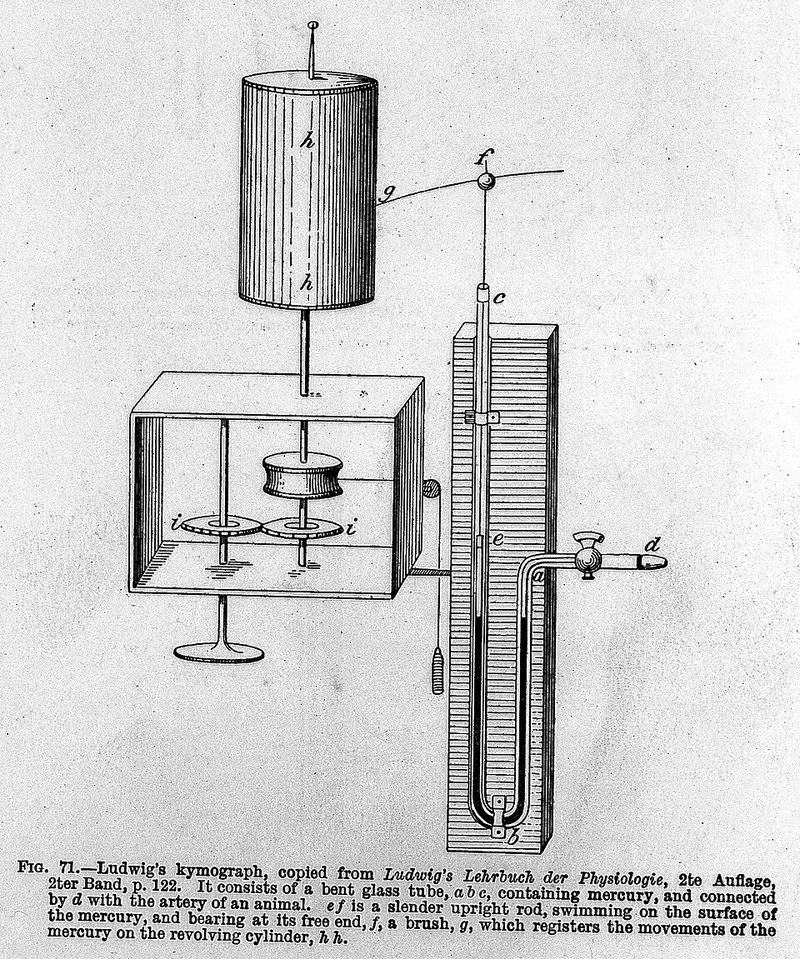
Western physiology caught up slowly. The German physiologist Carl Ludwig described the breath’s effect on heart rate in 1847. In the 1970s, Harvard cardiologist Herbert Benson popularized the “relaxation response,” a calm physiological state that can be brought on by simple techniques including slow, focused breathing. From the 1980s onward, researchers including Evgeny Vaschillo and Paul Lehrer developed resonance-frequency breathing and HRV biofeedback into a structured clinical method[3].
The two techniques on this site have more modern stories. 4-7-8 breathing was popularized by integrative medicine physician Dr. Andrew Weil, who adapted it from pranayama. Box breathing, sometimes called tactical breathing, has been taught in military and police settings as a way to stay composed under pressure, and was popularized by former U.S. Navy SEAL officer Mark Divine.
What the research says
For stress and mood, the evidence is encouraging. A 2023 meta-analysis pooled 12 randomized controlled trials with 785 adults and found that breathwork was associated with lower self-reported stress than control conditions, with a small-to-medium effect. It also found benefits for anxiety and depressive symptoms. The authors noted that many of the studies had a moderate risk of bias, so more rigorous research is needed[6].
Five minutes a day can make a difference. In a 2023 randomized trial from Stanford University, participants practiced one of three breathing techniques, box breathing among them, or mindfulness meditation for five minutes daily over a month. All groups improved, but the breathing exercises, especially an exhale-focused technique called cyclic sighing, produced a greater increase in positive mood than meditation, as well as a lower resting breathing rate[7].
4-7-8 breathing has less direct research. A small 2022 study of 43 young adults found that a short session of 4-7-8 breathing shifted heart rate variability toward parasympathetic (“rest-and-digest”) activity in people who had slept normally[8]. That fits the broader slow-breathing literature, but it measured immediate effects in a small group. Box breathing likewise draws most of its support from the general research on slow breathing rather than from many trials of its own.
How slow breathing can benefit you
- Calm under pressure. A minute or two of slow breathing before an exam, performance, or difficult conversation can take the edge off physical arousal: a racing heart, shallow breathing, tension.
- Winding down. Many people use 4-7-8 breathing in bed to settle a busy mind. Evidence specifically for sleep is limited, but reducing arousal before sleep is a sensible goal.
- A reset between tasks. A short breathing break is an easy way to clear your head and refocus without reaching for your phone.
- Better mood over time. As the trials above suggest, a few minutes of daily practice may bring modest but real improvements in stress and mood.
- A tool you always have. It’s free, silent, needs no equipment, and gives you a sense of control in moments that feel out of control.
Doing it safely
Breathe gently and never force a breath hold. It’s fine to shorten the steps. If you feel dizzy, lightheaded, or short of breath, stop and breathe normally. Never practice breath holding in or near water, where it can cause sudden blackouts, and don’t practice while driving. If you’re pregnant or have a heart, lung, or other medical condition, check with a healthcare provider first. Some people with panic attacks find that focusing on their breathing initially makes them more anxious. If that happens to you, stop, and consider exploring breathing techniques with a professional. Breathing exercises can support wellbeing, but they aren’t a treatment for anxiety disorders, insomnia, high blood pressure, or any other medical condition. See our disclaimer for more.
How to practice
Sit or lie down comfortably, relax your shoulders, and let your belly rather than your chest do most of the moving. For box breathing, breathe in, hold, breathe out, and hold again for four seconds each, or three if the holds feel uncomfortable. For 4-7-8 breathing, breathe in quietly through your nose for 4 seconds, hold for 7, and breathe out fully through your mouth for 8. Dr. Weil recommends starting with no more than four cycles. A realistic goal is about five minutes a day, the dose used in the Stanford trial. The guided breathing exercise counts for you with an animation and optional sound cues, so you can close your eyes and simply follow along.
Try it yourself
Put the science into practice with this free exercise — no sign-up, right in your browser.
References
- Smith, J. C., Ellenberger, H. H., Ballanyi, K., Richter, D. W., & Feldman, J. L. (1991). Pre-Bötzinger complex: A brainstem region that may generate respiratory rhythm in mammals. Science, 254(5032), 726–729. doi:10.1126/science.1683005
- Yackle, K., Schwarz, L. A., Kam, K., Sorokin, J. M., Huguenard, J. R., Feldman, J. L., Luo, L., & Krasnow, M. A. (2017). Breathing control center neurons that promote arousal in mice. Science, 355(6332), 1411–1415. doi:10.1126/science.aai7984
- Lehrer, P. M., & Gevirtz, R. (2014). Heart rate variability biofeedback: How and why does it work? Frontiers in Psychology, 5, 756. doi:10.3389/fpsyg.2014.00756
- Bernardi, L., Sleight, P., Bandinelli, G., Cencetti, S., Fattorini, L., Wdowczyc-Szulc, J., & Lagi, A. (2001). Effect of rosary prayer and yoga mantras on autonomic cardiovascular rhythms: Comparative study. BMJ, 323(7327), 1446–1449. doi:10.1136/bmj.323.7327.1446
- Zaccaro, A., Piarulli, A., Laurino, M., Garbella, E., Menicucci, D., Neri, B., & Gemignani, A. (2018). How breath-control can change your life: A systematic review on psycho-physiological correlates of slow breathing. Frontiers in Human Neuroscience, 12, 353. doi:10.3389/fnhum.2018.00353
- Fincham, G. W., Strauss, C., Montero-Marin, J., & Cavanagh, K. (2023). Effect of breathwork on stress and mental health: A meta-analysis of randomised-controlled trials. Scientific Reports, 13, 432. doi:10.1038/s41598-022-27247-y
- Balban, M. Y., Neri, E., Kogon, M. M., Weed, L., Nouriani, B., Jo, B., Holl, G., Zeitzer, J. M., Spiegel, D., & Huberman, A. D. (2023). Brief structured respiration practices enhance mood and reduce physiological arousal. Cell Reports Medicine, 4(1), 100895. doi:10.1016/j.xcrm.2022.100895
- Vierra, J., Boonla, O., & Prasertsri, P. (2022). Effects of sleep deprivation and 4-7-8 breathing control on heart rate variability, blood pressure, blood glucose, and endothelial function in healthy young adults. Physiological Reports, 10(13), e15389. doi:10.14814/phy2.15389
This article is for general education and isn’t medical advice. The exercises on this site are general wellness tools, not diagnostic tests or treatments — see the Disclaimer for details. Spotted an error or a newer study we should know about? Let us know.
More articles
- Reflexes · 7 min readThe Science of Reaction Time: Why Milliseconds Matter
- Eye training · 6 min readSmooth Pursuit: How Your Eyes Follow a Moving Target
- Eye training · 7 min readPeripheral Vision and Visual Attention: Seeing More Than You Look At
- Focus · 7 min readThe Schulte Table: The Science of Visual Search and Focus
- Memory · 6 min readWorking Memory: How Much Can Your Mind Hold at Once?
- Math · 6 min readMental Math: What Happens in Your Brain When You Calculate